Health and Safety Policy for Landscapers Hanwell
 This health and safety policy sets out the standards followed by landscapers in Hanwell to protect employees, clients, visitors, and members of the public during every stage of work. Whether the task involves garden maintenance, turf care, planting, pruning, clearance, or general exterior upkeep, safety must remain central to planning and delivery. Careful working practices help reduce accidents, protect equipment, and ensure professional results.
Our approach applies to all landscaping activities carried out across the service area, including residential and commercial sites. We recognise that outdoor work can present changing conditions, such as uneven ground, moving machinery, weather exposure, and temporary access restrictions. For this reason, every project is assessed in advance so that risks can be identified and controlled before work begins.
 All Hanwell landscaping work is expected to meet the relevant legal duties on safety, welfare, and site management. Staff are trained to work responsibly, follow instructions, and report hazards without delay. Equipment is checked regularly, work areas are kept orderly, and protective measures are used where required to support safe and efficient operations.
Risk assessments are completed for tasks that may involve cutting tools, lifting, vehicle movement, working at height, or handling soil, waste, and other materials. A suitable method of work is chosen for each job, with attention given to access routes, nearby occupants, and the condition of the site. When conditions change, the plan is reviewed and adjusted accordingly.
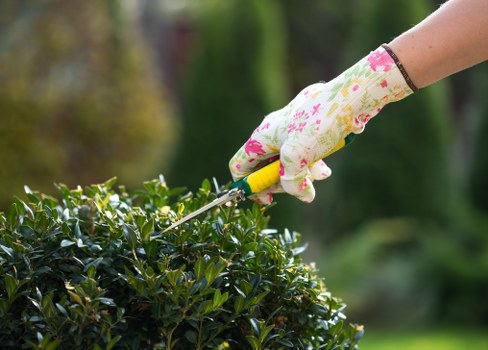
Personal protective equipment is provided and used where necessary. This may include gloves, eye protection, hearing protection, high-visibility clothing, safety footwear, and respiratory protection for dusty or disturbed areas. Workers are expected to keep PPE in good condition and replace items that are damaged or no longer effective. Using the correct protective equipment is a simple but important part of safe landscaping practice.
 Tools and machinery are maintained to reduce the risk of failure, injury, or poor performance. Before use, operatives inspect items for visible damage, loose parts, fuel leaks, worn blades, or blocked guards. Defective equipment is removed from service until repaired. Safe operation depends on both maintenance and responsible use, particularly when powered tools are used in confined or busy spaces.
Manual handling is another key concern for landscaping services in Hanwell. Heavy bags, paving materials, planters, and waste containers must be lifted, carried, or moved with care. Staff are encouraged to use mechanical aids where possible, share loads, and avoid unnecessary strain. Good posture, team lifting, and sensible route planning all help prevent injuries.
Site housekeeping is maintained throughout the workday. Loose debris, trailing cables, sharp offcuts, and collected waste are removed or secured to prevent slips, trips, and falls. This is especially important on shared premises, where members of the public or occupants may pass nearby. A tidy work area supports both safety and the professional presentation expected from a reliable Hanwell landscaper.
Weather can affect ground conditions, visibility, and the safe use of equipment. In wet, icy, windy, or very hot conditions, work may need to be delayed, reduced, or reorganised. Staff are instructed to take reasonable breaks, stay hydrated in warm weather, and use extra caution on slippery surfaces. Outdoor work requires constant awareness of the environment as well as the task itself.
 Waste management is handled in a controlled and responsible way. Green waste, packaging, soil, timber offcuts, and other material must be separated where practical and removed safely from site. Disposal practices are arranged to avoid obstruction, contamination, and unnecessary nuisance to nearby properties. This keeps landscaping projects cleaner, safer, and more efficient while supporting good environmental practice.
Communication is essential to safe working. Site supervisors, workers, and clients should share relevant information about hazards, access restrictions, fragile surfaces, buried services, pets, or vulnerable occupants before work starts. Where a task creates temporary disruption, appropriate warning signs, barriers, or verbal instructions should be used so that others understand the risk and can keep clear.
Fire safety, fuel handling, and electrical awareness are also included in daily procedures. Fuels and chemicals are stored securely, used sparingly, and kept away from ignition sources. Chargers, extension leads, and battery systems are checked before use and positioned to avoid damage or water exposure. Safe storage and sensible handling reduce avoidable incidents and support reliable operations.
Training and supervision remain central to this policy. New team members receive instruction on safe systems of work, correct tool use, emergency response, and reporting procedures. More experienced staff are expected to model good practice and intervene when unsafe behaviour is observed. Continuous awareness helps maintain a strong safety culture across all landscaping activity.
Emergency readiness is maintained through clear procedures for accidents, injuries, fires, spills, and severe weather. First aid provision is available where required, and workers know how to stop work safely, secure the site, and seek assistance. Incident reports are reviewed so that lessons can be learned and future risks reduced. This helps strengthen the overall standard of Hanwell landscaping services.
 This policy is reviewed regularly to ensure it remains current, practical, and suitable for the work undertaken. As methods, equipment, and regulations change, procedures are updated to keep standards high. By following this health and safety policy, landscapers Hanwell can deliver consistent, dependable, and responsible service while protecting people, property, and the working environment.

